
Less Is More
Why a hundred near-identical frames don't make a Box worth more, and how to turn a big shoot into a series buyers come back for.
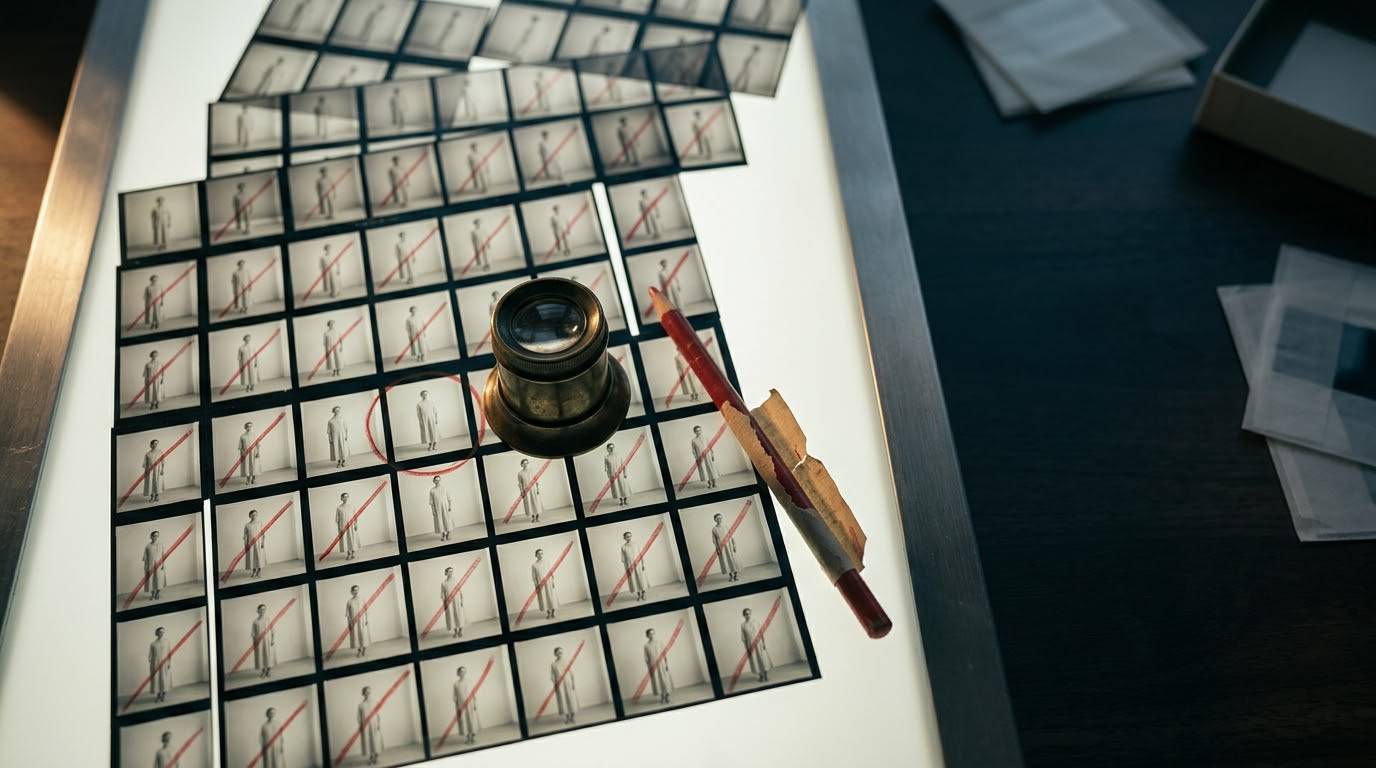
It happens every week. A new Box goes up with 160 images in it. Same backdrop, same two lights, same distance. The model shifts her weight from one foot to the other. Chin up, chin down. A hand moves from her hip to her hair and back again. Somewhere around frame 40 there's a genuinely beautiful picture, and around frame 41 there's almost exactly the same picture again.
The thinking behind it is easy to understand: more photos must mean more value. A buyer paying for 160 images is getting a bargain compared with one paying for 40. It feels generous.
It isn't how buyers experience it. And it isn't how good photographers work.
Why the dump happens
The Box format makes it possible. A Box can hold a lot of content, and memory cards are cheap, so nothing technical stops you from uploading the whole card. That freedom is useful for creators with a lot of genuinely different work to share. It also creates a temptation.
There's a second reason, and it's more human. Right after a shoot, every frame carries the memory of the moment it was taken: the joke that made her laugh, the light that hit just right for five minutes. Deleting a frame feels like deleting the afternoon. So nothing gets deleted, and the judgement that should happen on your computer gets handed to the buyer instead.
What buyers actually see
Buyers don't count files. They scroll. For the first dozen images they're looking at pictures. By the thirtieth near-identical frame they've stopped looking and started skimming, and the best image in the set slides past at the same speed as the weakest one.
A set is judged by its weak images as much as by its strong ones. The soft-focus frames, the half-blinks, the twentieth slight variation all drag down how the whole Box feels. A tight set of forty strong images reads as confident. The same forty buried among 120 fillers reads as unsure.
There's also the matter of what a Box is. People on BentBox collect Boxes the way they'd collect prints or photo books, and a collection is curated by definition. Nobody buys a photo book because it has the most pages.
The photographer as curator
Shooting is half the job. Choosing is the other half, and it's the half that shows. We made the case for it from the artistic side in The Model Is Not the Subject. Here's the practical version: a simple way to cull a shoot down to a set worth selling.
- The technical pass. Remove anything out of focus, blurred by motion, caught mid-blink, or badly exposed beyond saving. Also remove frames with a distracting stray element you'd never fix. This pass is quick and painless.
- The duplicates pass. Group the remaining frames by pose and setup. From each group keep the single best one, or two if they're genuinely different in expression or angle. This is where most of the cutting happens, and where it matters most.
- The "what does it add?" pass. Every frame left has to bring something the others don't: a new pose, angle, light, expression or detail, or the next beat in the story. If it doesn't add anything, it goes.
- The sequence pass. Put the set in order. Open strong, vary the rhythm between wide shots, mid shots and close details, and end on a frame that lingers. The order you shot in isn't automatically the best order to show in.
- The next-day pass. Close the folder and come back tomorrow. With a little distance from the shoot, you'll cut more, and you'll be right to.
A tip for the agonising moments: if you can't decide between two near-identical frames, it almost never matters which one you keep. Pick one and cut the other. The buyer will only ever see the one you chose.
Why 30 to 50
It's enough room to tell a story with real variety: a few wide, establishing frames, a run of mid shots, close-up details, and the handful of standouts the whole shoot was building towards. It's few enough that every image can be a good one, and the buyer reaches the end wanting more instead of feeling tired.
Treat it as a ceiling, not a quota. If a shoot gives you 22 excellent images, publish 22. Padding a set up to 50 with weaker frames defeats the whole point.
Remember the shop window too. With preview thumbnails switched on, buyers see the first five images before they buy. In a curated, sequenced set those five can be your best work. In a dump they're simply whatever you shot first.
Got more good material? Make a series
Sometimes a shoot really does produce more than 50 strong, distinct images: two outfits, two locations, daylight and then tungsten after dark. That isn't a reason for one giant Box. It's material for a series.
Split the shoot along its natural chapters, such as a look, a location or a time of day, and give each part its own cover, description and price. On BentBox you can link the Boxes so a buyer has to own Part 1 before they can buy Part 2. It works better for everyone:
- Each part is tighter, so each one is easier to sell on its own merits.
- Buyers decide with less risk. A focused Box at a fair price is an easier yes than one very large Box.
- Fans come back. Someone who loved Part 1 already knows what they'll get in Part 2. That's how loyal collectors are built.
- You get more moments to promote. Three releases mean three announcements to your supporters instead of one.
How to set up a Box series
- Publish Part 1. Publish the first Box of the series as usual and copy its full URL, for example https://bentbox.co/buybox?abc123.
- Open Part 2. Go to the second Box, open Manage box and then the Price & publish page.
- Link the previous Box. Under Extras, choose "Link to a previous box in a series", paste the URL of Part 1 and save.
- Repeat for each part. Link Part 3 to Part 2, Part 4 to Part 3, and so on, so each Box unlocks the next.
- Tell buyers what comes next. Name the Boxes clearly and use the thank-you message on each part to let buyers know the next one is waiting.
Box series are a Pro feature. Part 2 can't be bought until the buyer owns Part 1.
When a big set is justified
Rarely, but it happens. In a narrative or documentary set, the progression itself can be the point: a day unfolding from first light to night. An event or a long behind-the-scenes shoot can cover many moments that are genuinely different from one another. These sets can earn more images than the usual range.
The test stays the same whatever the size. Look at each image and ask whether anyone would miss it if it were gone. If the honest answer is no, it goes.
Less, but better
"Less is more" doesn't mean giving buyers less. It means giving them only your best and trusting that it's enough, because it is. A set where every frame earns its place tells the buyer that someone looked hard, made decisions and cared about the result. That's what people pay for, and it's what brings them back for the next Box.