
A choice, not a technical limit
On BentBox, every Box is limited to 50 images. People sometimes assume this is a technical constraint. It isn't. A Box is a digital container, and it could hold hundreds or thousands of files without breaking a sweat.
The limit is a choice. We set it at 50 because, from both a sales and a curation point of view, 50 is the sweet spot. It's enough to tell a complete story, and few enough that every image has to earn its place.
This article is about why the rule exists. If you want the step-by-step method for cutting a shoot down, read Less Is More: How Many Photos Should a Photo Set Have?
"But my set has more than 100 images"
It's the objection we hear most often from photographers. If that's you, it's worth pausing on one honest question: what does your set actually look like?
Scroll through it and ask, image by image:
- Does this frame add something the others don't?
- Would it stand on its own as an independent image?
- If I removed it, would the set be weaker, or would nobody notice?
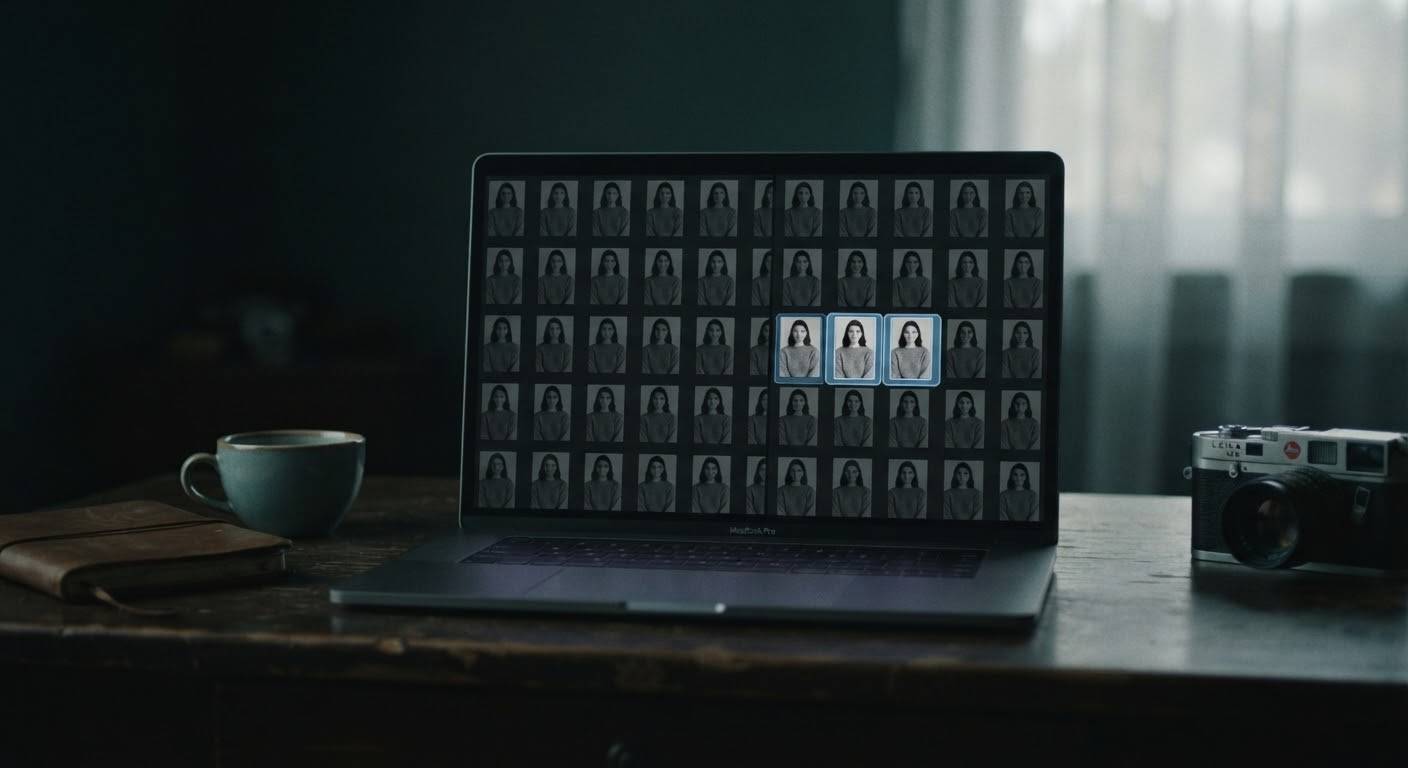
150 images of the same model in more or less the same pose is not a photo set. It's a dump of everything on your memory card.
The camera captured it all, but nobody chose anything.
A dump rewards nobody
An uncurated dump feels generous, but it works against everyone involved.
Not you, the seller
A buyer browsing 180 near-identical frames sees filler, not abundance. Perceived value drops with every repeat, and so does the price you can ask.
Not the buyer
They're left to do the editing you skipped, scrolling past near-duplicates to find the handful of images that land.
Not the work
Your strongest images get buried. The best frame of the shoot ends up competing with its own outtakes.
A curated Box shows a journey
A Box of 50 carefully chosen images is a different thing altogether. It shows a journey through the shoot: an opening, a build, variation in light, pose and mood, and a close. Each image is there because it moves the story forward.
That curation is visible, and buyers notice it:
- It creates value for you. A tight, intentional set feels like a finished piece of work, and a finished piece of work can be priced higher than a pile of files.
- It creates value for the buyer. They can see that effort went into building a set with intent, not just offloading a session's worth of images into a Box and putting it up for sale.
Getting from 200 frames to 50
If you're staring at 200 frames, the cut is easier than it looks. Remove the technical failures, collapse every cluster of near-duplicates to its single strongest frame, keep only the images that add something the others don't, and put what's left in an order that tells the story. Then come back the next day and cut again.
We walk through each of those passes in detail in Less Is More.
As a rule of thumb, most strong sets land at 30 to 50 images. Fifty is a ceiling, not a target.
Curation doesn't stop at the images
The same principle applies to how a Box is presented as a whole: its title, its cover image and its description. A carefully edited set with a generic title, a random cover and a one-line description undoes much of that work. The presentation is the first thing a buyer sees, and it should tell them the same thing the images do: that this set was made with intent.
- Title: name the idea or story of the set, not just the model's name and a date.
- Cover: choose the single image that best represents the set, not just the first file in the folder.
- Description: a few sentences on the concept, the setting and what the buyer can expect to see.
We go deeper into this in Would You Buy It? How to Name and Describe Your Photo Set.
Let every image count
The 50-image limit isn't there to restrict you. It's there to protect the value of your work. Fewer, better images sell for more, satisfy buyers more, and show off what you can actually do as a photographer.
Edit hard. Tell a story. Let every image count.