
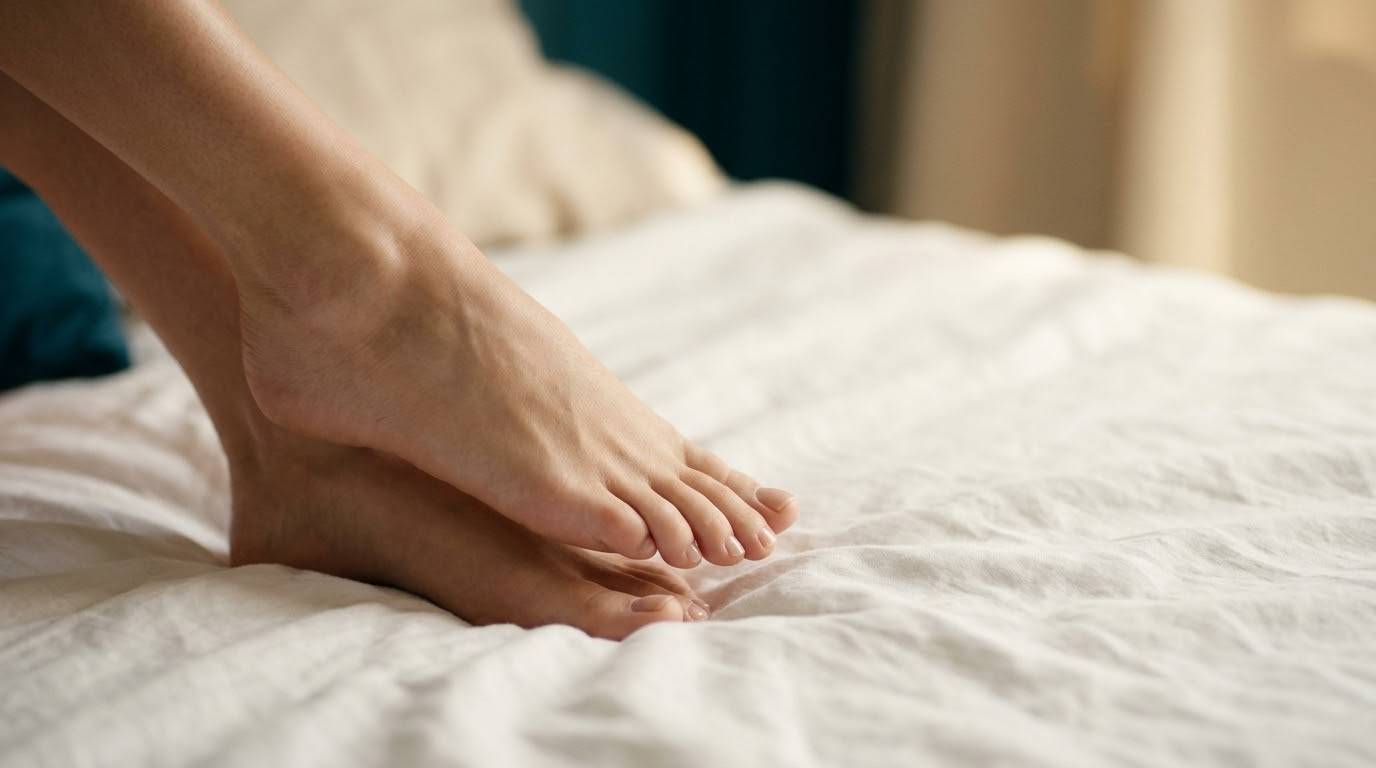
Mention a foot fetish and people tend to laugh. Yet the numbers say it is one of the most widespread sexual interests in the world, shared by people of every gender and orientation, and among the easiest to include in a relationship. It deserves a more serious, and more generous, explanation.
The short version
- Feet are the most common body-part fetish: 47% of people with a body-part fetish in one large study focused on feet or toes.
- About 1 in 7 Americans have fantasised about feet.
- No single theory explains it. Brain wiring, learning, aesthetics, symbolism and scent all play a part.
- It is not a disorder. The WHO removed fetishism from its diagnostic manual.
- Talk first, start with a massage, keep feet healthy, and always ask before taking photos.
01What a foot fetish is
A foot fetish, known clinically as podophilia, is a sexual interest in feet, toes or footwear. Like most sexual interests, it is a spectrum. At one end is simple appreciation: finding feet attractive, noticing them, enjoying them in a partner. At the other, feet are central to arousal and the most important part of a sexual encounter.
Massage and worship
Touching, massaging, kissing or adoring a partner’s feet. Often the core of the interest, and the easiest place to start.
Shoes and footwear
High heels, boots, sandals, trainers: for some, footwear matters as much as the foot. Shoe fetishism even has its own name.
Stockings and socks
Nylon, silk or cotton add a visual and tactile layer, and overlap with lingerie and hosiery fetishes.
Scent and sight
For some the attraction is visual — arches, soles, toes. For others, a partner’s natural scent is part of the appeal.
02How common it is
American adults have fantasised about feet or toes3
feet were the most common fetish term in an analysis of internet search data2
The most cited study, by researchers at the University of Bologna, analysed 381 online fetish communities representing at least 5,000 people. Body parts were the most common category of fetish, and within it, feet and toes came first by a wide margin: 47 percent of body-part fetishists were interested in feet.1,2 Footwear was among the most common object fetishes too. Psychologist Justin Lehmiller’s survey of more than 4,000 American adults found that about 1 in 7 had fantasised about feet or toes.3
Men report a foot interest more often than women, but it exists in every gender and every sexual orientation — and far more people enjoy having their feet touched and admired than would describe themselves as having a fetish.
03Why feet? What science says
There is no single explanation, and anyone who offers one is oversimplifying. Several theories have evidence behind them, and most people with a foot interest probably have more than one of them at work.
The brain map theory, and its problem
The most famous explanation comes from neuroscientist V. S. Ramachandran. On the brain’s map of the body, the area that processes sensation from the feet sits right next to the area for the genitals. Ramachandran noticed that some amputees felt sexual sensations in a missing foot, and suggested that a little “cross-wiring” between neighbouring areas might explain foot fetishes in everyone else too.4
It is an elegant idea, and it is everywhere online. But it has been tested. A 2013 study from Bangor University found that people generally do not find their feet erogenous to touch, that feet did not cluster with the genitals in how people rate erogenous zones, and that direct stimulation of that brain area during surgery did not produce erotic sensations. The researchers suggested the cross-talk may still exist, but in a different, deeper part of the brain.5 In short: the theory is interesting, unproven, and probably not the whole story.
Learning and early experience
Studies of people with a foot interest find that it usually begins around adolescence.2 Many sexologists see fetishes as partly learned: an early association between arousal and feet, shoes or stockings, reinforced over years. That would explain why the specific details — bare feet or heels, soles or toes — vary so much from person to person.
Aesthetics
Feet are expressive. The curve of an arch, the line of the toes, the contrast between a soft sole and a strong ankle: many people with a foot interest describe it as an aesthetic attraction first. It is the same eye that appreciates hands, necks or the small of a back.
Worship and submission
Feet carry powerful symbolism. Kneeling at someone’s feet, kissing or washing them, is one of the oldest gestures of devotion and submission. For many people foot worship is about that power dynamic as much as the feet themselves, which is why it overlaps so often with BDSM and femdom.
Scent
For some people, scent is central. One study found that 45 percent of people with a foot fetish were aroused by foot odour or worn socks.6 As with other forms of scent attraction, it is usually a specific partner’s natural scent that matters, not odour in general. We explore the science of scent and desire in our article on rimming and the scent of desire.
The safe-sex theory
One unusual study proposed that interest in feet rises during epidemics of sexually transmitted infections, from medieval gonorrhoea to the AIDS era, when feet offered a sexual focus without the risk.2 It is a speculative, preliminary finding, but it captures something real: feet are one of the lowest-risk ways to be sexual with someone.
No single theory explains a foot fetish. Brain wiring, early experience, beauty, symbolism and scent all play a part, in different measure for different people.
04A long history
Erotic interest in feet is anything but modern.
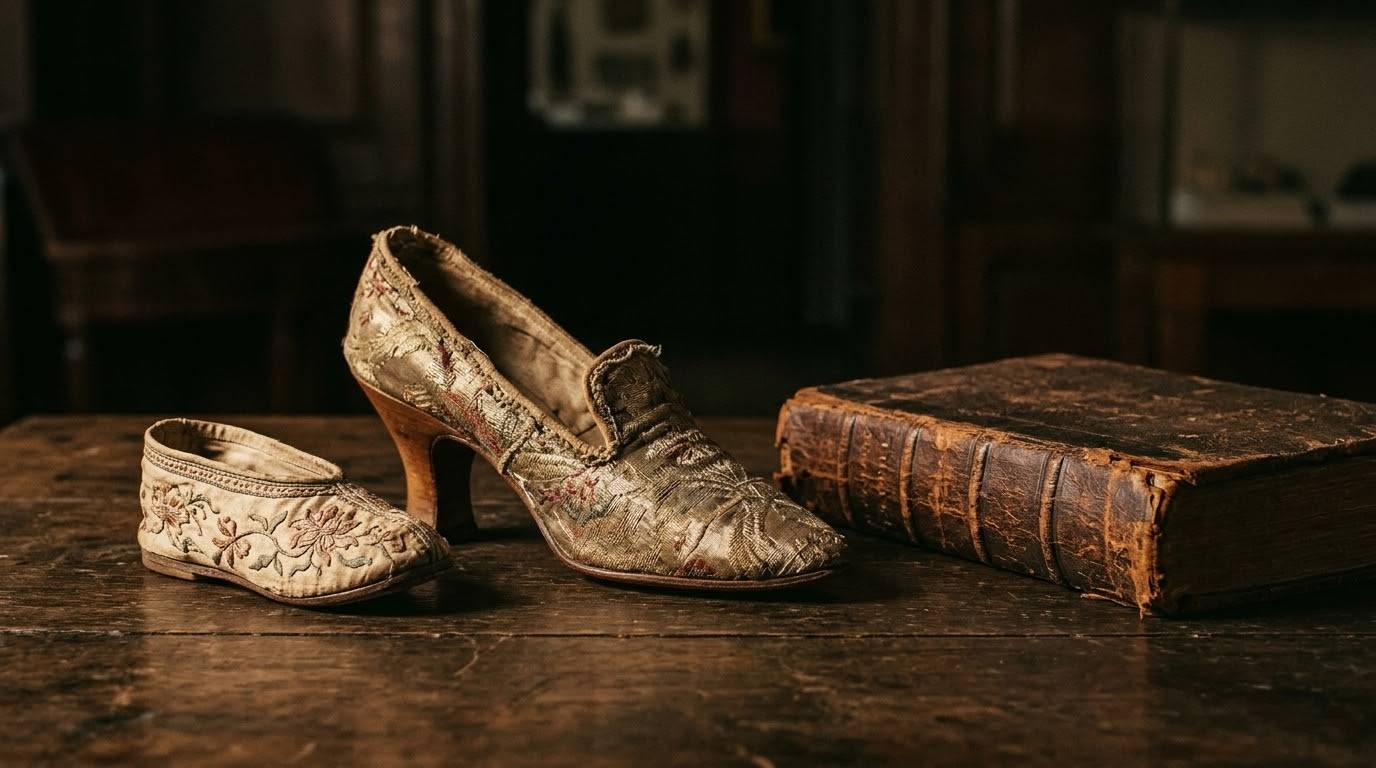
- Imperial China. For around a thousand years, from roughly the tenth century, upper-class Chinese girls had their feet tightly bound. A tiny bound foot, called a golden lotus, was an erotic ideal and a mark of status, while larger feet were dismissed as “iron lotuses”.7 It is the most extreme, and painful, example of feet being shaped by desire.
- Eighteenth-century France. In 1769 the writer Rétif de la Bretonne published Le Pied de Fanchette, the story of a young woman pursued by admirers of her pretty feet and shoes. His fascination was so well known that shoe fetishism is still called retifism after him.8
- Folklore. Cinderella, with her tiny foot and her lost slipper, is one of the most retold stories in the world: a romance decided entirely by a foot and a shoe.
- The internet age. Online, feet became one of the most searched fetish terms of all,2 and selling foot photos turned into a well-known side income for creators.
05Is it normal?
Yes. When the World Health Organization revised its classification of diseases for ICD-11, it removed fetishism as a diagnosis: a fetish on its own is not linked to poor psychological or social functioning, and labelling it a disorder only added stigma.9
A sexual interest only becomes a clinical concern when it causes the person significant distress, takes over their life against their will, or involves people who have not consented. A foot fetish shared happily with a willing partner is simply part of someone’s sexuality.
06Myths and facts
07Exploring it together
As fetishes go, feet are one of the easiest to share. They involve no risk of pregnancy, very little risk of infection, and a starting point — a foot massage — that almost everyone enjoys.
- Bring it up outside the bedroom. Mention it in a relaxed moment, as something you enjoy rather than a confession. Many partners are relieved: as fetishes go, feet are one of the easiest to say yes to.
- Start with a foot massage. A long, slow foot massage with a good oil or lotion is the natural first step. It is relaxing for the receiver and lets the giver enjoy feet without any pressure on either side.
- Find out what they enjoy. Some people love having their feet touched, kissed or worshipped; others are ticklish or self-conscious about their feet. Ask, watch the reaction, and adjust.
- Agree limits, scent and footwear. Talk about what is in and out: freshly washed or after a day in shoes, bare feet or stockings, heels or trainers, tickling or not. Preferences vary a lot, on both sides.
- Keep it clean and healthy. Wash and dry feet well, especially between the toes, keep nails trimmed and smooth, and skip foot play on skin with athlete's foot, verrucas, cuts or blisters.
- Ask before taking photos. Feet are often photographed, and photos can travel. Always ask before taking pictures, agree where they will be kept, and never share them without consent.
- Check in afterwards. Talk about what each of you enjoyed and what you would like to try next. A foot fetish can be a small part of a sex life or a central one; what matters is that it works for both of you.
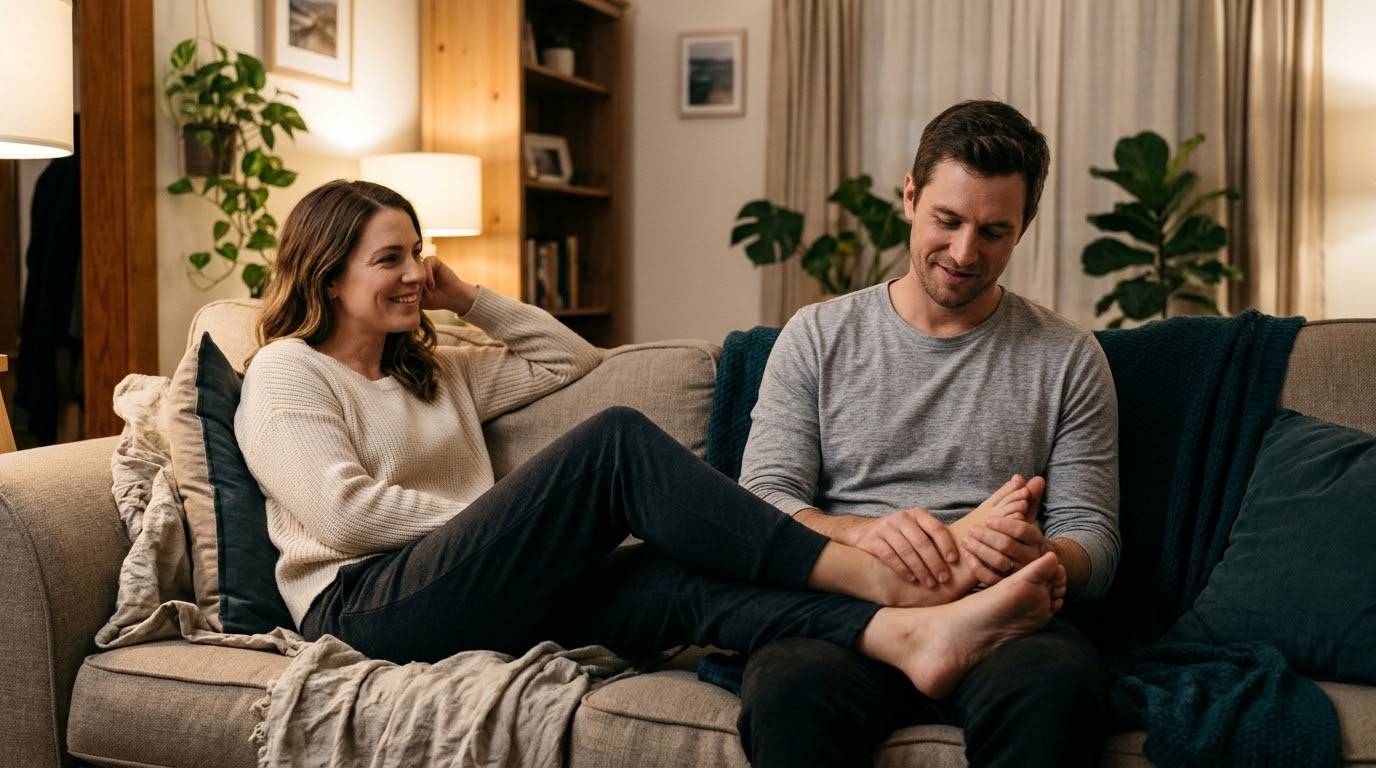
If you are on the receiving end and feel self-conscious about your feet, you are not alone. Many people dislike their own feet. A partner with a foot fetish is usually the person least likely to judge them, and often the one who finds them most beautiful.
08Hygiene and foot health
Foot play is among the safest forms of sexual contact, but feet can carry infections of their own.
- Athlete’s foot is a fungal infection that spreads through skin contact and shared towels, socks and shoes. Dry feet thoroughly, especially between the toes, and use a separate towel for your feet.10
- Verrucas are caused by HPV and spread through direct skin contact, especially when skin is soft and damp.11 Skip foot play, and especially toe sucking, on feet with a verruca until it has cleared.
- Cuts, blisters and broken skin are an entry point for infection, in both directions. Let them heal first.
- Nails should be trimmed and smooth, for comfort as much as hygiene.
- Washing and scent. Preferences differ: some people love freshly washed feet, others prefer a natural scent. Agree what you both enjoy, but if there is any sign of infection, wash and wait.
09Feet in photography and content
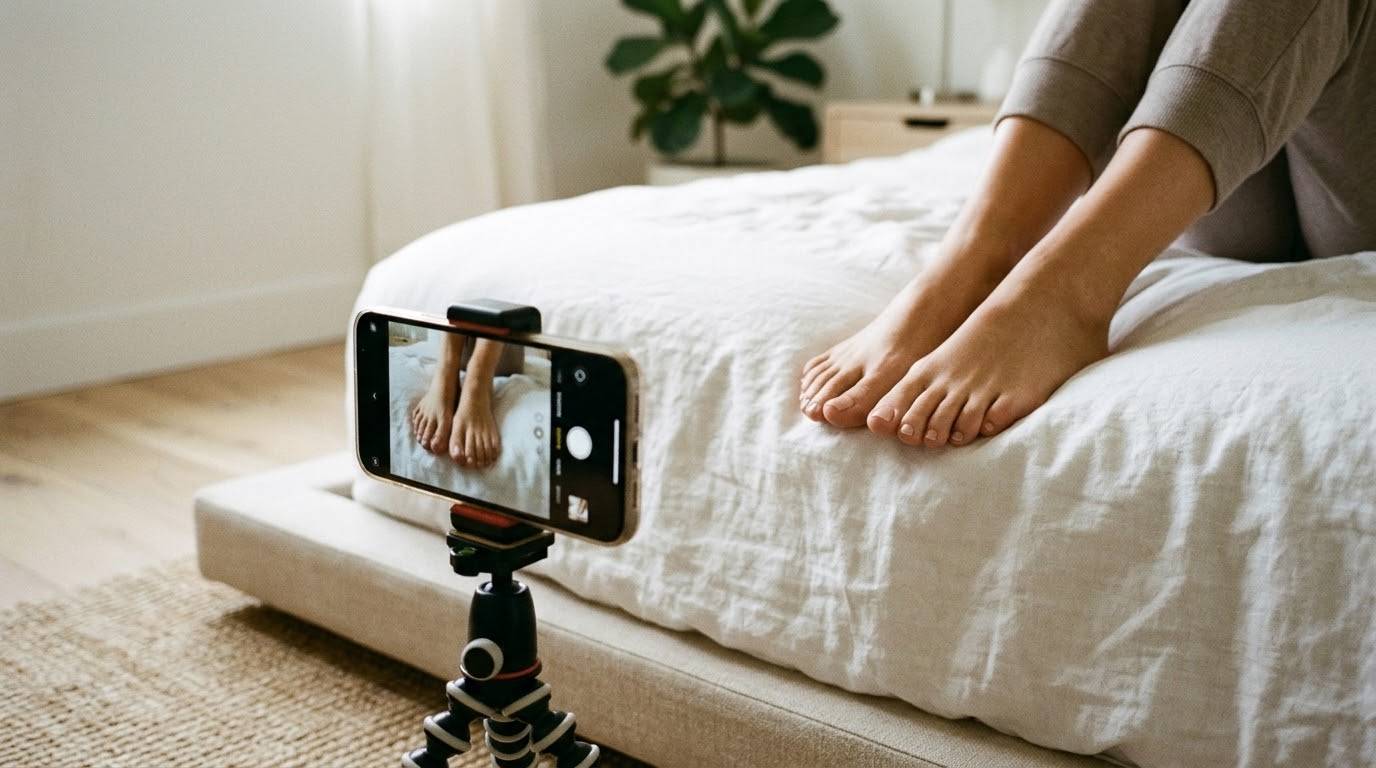
Feet are one of the most photographed fetishes, and one of the most popular with buyers. They also have a big advantage for creators: foot content can be beautiful, artistic and completely safe for work, which makes it easy to promote on social media and lets you stay anonymous.
- Light for shape. Soft side light from a window shows the arch and the line of the toes; hard light exaggerates wrinkles and texture.
- Angles matter. Shoot from slightly below or at foot level, not from above. Pointed toes lengthen the foot; a relaxed foot looks softer.
- Styling. A neat pedicure, moisturised skin and a clean background make the difference. Footwear, stockings, water, sand and bedsheets give each set a theme.
- Sets, not single shots. Buyers collect themed series: one setting, one styling, many angles. Our guide to selling feet pics online covers pricing and promotion.
- Privacy. Tattoos, birthmarks, jewellery and recognisable floors or rugs can identify you. Strip location data from every file before you publish.
Avoid foot pic scams. Never send free “samples” to strangers who promise to pay later, never pay a fee to receive a payment, and be wary of anyone who pushes you to move the deal to another app. On BentBox, buyers pay before they see anything, you set your own price and keep 100% of it because the fee is paid by the buyer, and your identity is verified privately so you can stay anonymous. If anyone else appears in your content, they need to be a verified adult with a release.
Turn your best foot forward
List your foot photo sets and videos as Boxes, set your own price and keep 100% of it. Verified privately, anonymous publicly, and always in control of your content.
Become a BentBox creator For collectors →FAQFrequently asked questions
What is a foot fetish?
A foot fetish, or podophilia, is a strong sexual interest in feet, toes or footwear. It ranges from a mild preference, such as finding feet attractive, to a central part of someone's sexuality where feet are needed or strongly preferred for arousal. An attraction to shoes in particular is sometimes called retifism.
Is a foot fetish common?
Yes. It is the most common fetish for a body part. In an analysis of online fetish communities representing at least 5,000 people, 47 percent of those whose fetish involved a body part were interested in feet or toes. In a survey of more than 4,000 Americans, about 1 in 7 people had fantasised about feet.
Why do some people find feet sexy?
There is no single answer. Neuroscientist V. S. Ramachandran suggested that feet and genitals sit next to each other on the brain's body map, allowing some cross-wiring, though a later study did not support that version of the theory. Other explanations include early experiences and learning, the aesthetics of feet, the symbolism of worship and submission, and the role of scent.
Is having a foot fetish normal?
Yes. The World Health Organization's ICD-11 removed fetishism as a diagnosis, because a fetish on its own is not linked to poor psychological or social functioning. A sexual interest only becomes a clinical concern if it causes the person significant distress or involves people who have not consented.
Are foot fetishes more common in men?
Men report a foot interest more often than women, but many women have one too, and many more enjoy having their feet touched, massaged or admired. The interest exists across all sexual orientations.
Where does the foot fetish come from historically?
Erotic interest in feet is ancient. In imperial China, tiny bound feet called golden lotuses were an erotic and status ideal for around a thousand years. In 1769 the French writer Rétif de la Bretonne published Le Pied de Fanchette, a novel about a young woman pursued by shoe admirers, which gave shoe fetishism the name retifism.
How do I tell my partner I have a foot fetish?
Bring it up in a relaxed moment outside the bedroom, as something you enjoy rather than a confession. Suggest a foot massage as a first step, ask what your partner enjoys and what they would rather not do, and agree limits together. Many partners are relieved, because feet are among the easiest fetishes to include.
Is foot play hygienic?
It is when feet are healthy and clean. Wash and dry feet thoroughly, especially between the toes, keep nails trimmed, and skip foot play when there is athlete's foot, a verruca, a cut or a blister. Athlete's foot and verrucas are both contagious through skin contact.
Can you sell foot photos on BentBox?
Yes. Foot photo sets and videos can be sold as Boxes, with the creator setting their own price and keeping 100 percent of it, since the BentBox fee is paid by the buyer. Creators are verified privately, so they can stay anonymous to buyers. Anyone else who appears needs to be a verified adult with a release.
How do I avoid foot pic scams?
Never send free samples to strangers who promise to pay later, never pay a fee to receive a payment, and be wary of anyone who pushes to move the conversation and payment off a platform. Selling through a platform where the buyer pays before receiving the content removes most of the risk.
SOURCESReferences
- Cristina Scorolli, Stefano Ghirlanda, Magnus Enquist, Sergio Zattoni and Emmanuele A. Jannini. Relative prevalence of different fetishes. International Journal of Impotence Research, 2007.
- Psychology Today. In Feet First: A brief look at foot fetishism (reviewing Scorolli et al., Weinberg et al. and Giannini et al.). Psychology Today.
- Justin J. Lehmiller. Episode 488: How Feet Became A Popular Fetish. Sex and Psychology, 2026.
- Live Science (on V. S. Ramachandran, Phantoms in the Brain). Why Do People Have Foot Fetishes?. Live Science.
- Bangor University (reporting Turnbull et al., Cortex, 2013). The neuroscience of erogenous zones. Bangor University.
- Wikipedia. Foot fetishism. Wikipedia.
- Amanda Foreman. Why Footbinding Persisted in China for a Millennium. Smithsonian Magazine.
- Wikipedia. Nicolas Restif de la Bretonne. Wikipedia.
- Richard B. Krueger, Geoffrey M. Reed et al.. Proposals for Paraphilic Disorders in the International Classification of Diseases and Related Health Problems, Eleventh Revision (ICD-11). Archives of Sexual Behavior, 2017.
- NHS. Athlete's foot. NHS.
- Guy's and St Thomas' NHS Foundation Trust. Verruca. NHS.
This article is for general education about sexuality and is not medical or psychological advice. If you have a foot infection or another health concern, please speak to a doctor or podiatrist.