
A Short History of Pornography
From Roman frescoes to the phone in your pocket, every new medium brought new erotic images, a moral panic and a new law. Here is how it happened, and where it stands now.
- Fresco
- Photo
- Film
- Magazine
- Video
- Web
- Creator
The history of pornography is, more than anything, a history of media. Every time people found a new way to reproduce images, erotic images were among the first things they made with it, and every time, the authorities responded with a new law about who should be allowed to see them. The pattern runs from Renaissance engravings to smartphone apps, and it is still running.
This is the short version of a long story, focused on the West, where most of the legal history that shapes today's internet was written. For definitions, and for why nudity alone is not pornography, read our companion piece What Is Pornography?
| 79 CE | Vesuvius buries Pompeii, preserving its erotic frescoes and objects |
|---|---|
| 1524 | I Modi: Marcantonio Raimondi's explicit engravings; Pope Clement VII has him imprisoned and the prints destroyed |
| 1748 | John Cleland's Fanny Hill (Memoirs of a Woman of Pleasure) appears in London |
| 1769 | Restif de la Bretonne coins "pornographe" in a treatise on regulating prostitution |
| 1821 | Pompeii's erotic finds locked away in Naples' Secret Museum (open fully to the public in 2000) |
| 1839 | The daguerreotype is announced; erotic photographs follow within a few years |
| 1857 | UK Obscene Publications Act |
| 1873 | US Comstock Act bans mailing "obscene" material |
| 1896 | Le Coucher de la Mariée, a short French striptease film, one of the earliest erotic films |
| 1948 | The first Polaroid instant camera goes on sale: intimate photos no longer pass through a photo lab |
| 1953 | First issue of Playboy |
| 1969 | Denmark becomes the first country to legalise picture pornography (written pornography in 1967) |
| 1972 | Deep Throat becomes a mainstream box-office hit |
| 1973 | Miller v. California sets the US obscenity test |
| 1997 | Reno v. ACLU strikes down US online indecency rules |
| 2006 | Free "tube" sites arrive and upend the studio business model |
| 2016 | OnlyFans launches; creator subscription platforms let performers sell directly to fans |
| 2021 | Mastercard requires age, identity and consent verification for everyone depicted in adult content |
| 2023 | Louisiana's age-verification law takes effect; the EU designates three adult sites as very large platforms under the DSA |
| 2024 | Reuters investigates creator-management agencies and the paid "chatters" who pose as creators in fan messages |
| 2025 | US TAKE IT DOWN Act targets non-consensual intimate images, including deepfakes (May); Supreme Court upholds Texas's age-verification law (27 June); UK age checks become mandatory (25 July) |
Dates for ancient and early works are approximate. Sources are listed at the end of the article.
Did ancient cultures have pornography?
They had plenty of sexual imagery, but calling it pornography is an anachronism. When Vesuvius buried Pompeii in 79 CE, it preserved frescoes of couples in bed, phallic charms hung for good luck and paintings on brothel walls. To Romans these were decoration, humour, religion and advertising, not a forbidden category.
Other cultures treated sex with similar frankness. The Indian Kama Sutra, compiled around the 3rd century CE, is a manual on love and pleasure as part of a good life. In Edo-period Japan (1603–1868), shunga woodblock prints were made by the same masters who made landscapes and portraits, and were widely collected. None of these were "pornography" to the people who made them. The idea that sexual images form a separate, shameful class came much later.
How did the printing press change erotic art?
Printing made images cheap to copy, and that changed everything. In 1524 the engraver Marcantonio Raimondi published I Modi, sixteen explicit engravings of couples, based on drawings attributed to Giulio Romano. Pope Clement VII had Raimondi imprisoned and the prints destroyed. The poet Pietro Aretino secured his release, wrote sixteen explicit sonnets to go with the images, and in 1527 the set was printed again. The papacy seized every copy it could find.
The reaction is the point. A painting on a palace wall reached a handful of aristocrats. A print could reach anyone with a few coins, and that, more than the content itself, is what alarmed the authorities. The same worry followed erotic books: L'École des filles in France in 1655, and John Cleland's Fanny Hill in London in 1748, a novel that stayed banned in parts of the English-speaking world for two centuries.
The 19th century turned the worry into law. Britain passed the Obscene Publications Act in 1857. In 1868 an English court set the "Hicklin test", asking whether material tended to "deprave and corrupt" those whose minds were open to such influences. In the United States, the 1873 Comstock Act made it a crime to send "obscene" material through the mail, including information about contraception.
When did photography and film enter the picture?
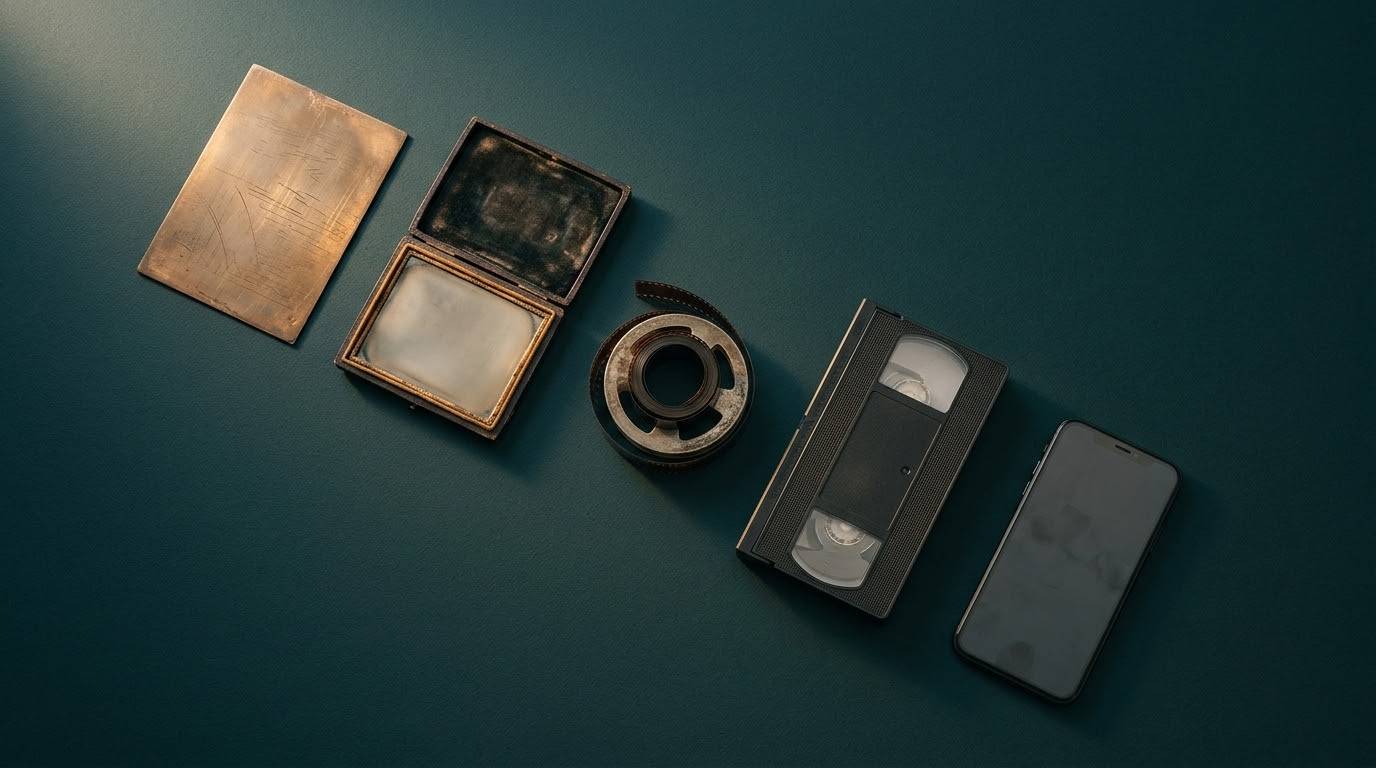
Almost immediately. The daguerreotype was announced in 1839, and within a few years Paris studios were selling erotic daguerreotypes, then stereoscopic nudes that appeared three-dimensional through a viewer. By the late 19th century, cheap printed "French postcards" circulated across Europe and America. For the first time, erotic images showed real people rather than a painter's invention, which made them feel more intimate and more dangerous.
Film followed the same path. Le Coucher de la Mariée (1896), a short French film of a woman undressing for bed, is one of the earliest erotic films. Explicit "stag films" appeared in the early 1900s, shown privately to all-male audiences at clubs and parties. They were illegal almost everywhere, and the people who made and acted in them were rarely credited.
When art was called obscene
The line between art and pornography has always been drawn by viewers, and it moves. Works now hanging in the world's great museums were once treated as scandalous, and some still are online.
Manet, Olympia
A nude who looks straight back at the viewer. The Paris Salon posted guards to protect the canvas from angry visitors.
Courbet, L'Origine du monde
Kept behind a curtain or a sliding panel by its private owners for over a century, and still being removed from social media in the 2010s.
Michelangelo, David
A Florida school principal left her job after a class was shown the statue, and parents complained it was pornographic.
The nipple rule
Meta's Oversight Board told the company its adult nudity policy, which treats female and male chests differently, needed a rethink.
How did pin-ups and magazines go mainstream?
Through war and then through the newsstand. During the Second World War, pin-up photographs and illustrations travelled with soldiers everywhere, and glamour imagery became part of mainstream popular culture. In December 1953, Hugh Hefner published the first issue of Playboy, featuring Marilyn Monroe. It packaged nude photography alongside fiction, interviews and journalism, and sold it as part of a sophisticated adult lifestyle rather than something to hide.
The courts slowly followed. In Roth v. United States (1957), the US Supreme Court held that obscenity was not protected speech, but narrowed what counted as obscene. In 1966, in Memoirs v. Massachusetts, it cleared Fanny Hill, more than two centuries after the book first appeared.
What was the Golden Age of porn?
Denmark becomes the first country in the world to legalise picture pornography, two years after legalising written pornography. Sweden and others soon follow.
The late 1960s and the 1970s were a period of rapid change. Denmark's decision was watched closely abroad. In the United States, a presidential commission reported in 1970 that it had found no reliable evidence that explicit material caused crime, and recommended relaxing the law for adults. The government rejected the recommendations.
Meanwhile, explicit feature films with plots began playing in public cinemas. Deep Throat (1972) became a box-office hit, with couples and celebrities among its audiences, a moment the press called "porno chic". This period, roughly 1969 to the mid-1980s, is what people mean by the Golden Age of porn.
The legal backlash shaped what followed. In 1973 the Supreme Court set the three-part Miller v. California test for obscenity, which is still used today. In 1986 the Meese Commission, appointed under President Reagan, reached the opposite conclusion from the 1970 commission and called for tougher enforcement. Two other moves in 1988 had lasting effects. A California court ruled that paying performers to appear in a film was not prostitution, which made legal production possible. And a new federal law required producers to keep records proving the age of every performer, an early form of the verification rules that now cover the whole industry.
How did home video and the internet change pornography?
They moved it from public spaces into private ones. Home video in the late 1970s and 1980s took explicit films out of cinemas and into living rooms. Adult titles are often credited with helping the VCR spread, and the adult cinemas of the Golden Age closed within a few years.
The internet went further. In the 1990s, explicit images spread through newsgroups and early websites, and governments tried to catch up. The US Communications Decency Act of 1996 tried to ban "indecent" material online, but in Reno v. ACLU (1997) the Supreme Court struck those provisions down as unconstitutional.
From around 2006, free "tube" sites built on uploaded clips offered vast libraries at no cost. Studio revenues collapsed, piracy became the norm, and the person on screen rarely had any say over where their image ended up. Smartphones then made all of it private and portable.
What changed in the 2020s?
The focus moved from obscenity to consent. Creator platforms in the 2010s had already shifted power toward performers, who could now sell their own work directly to their fans. Then, in December 2020, reporting about unverified and non-consensual videos on one of the largest tube sites led Visa and Mastercard to cut it off. The site removed millions of videos uploaded by unverified users.
What followed was a wave of rules that now shapes every adult platform:
- 2021: card networks. Mastercard required adult platforms to verify the age and identity of everyone depicted and everyone uploading, document consent, and review content before it is published.
- 2023: US states. Louisiana's law requiring age checks on adult sites took effect on 1 January, and many states followed.
- 2023: the EU. The European Commission designated three adult sites as very large online platforms under the Digital Services Act, with stricter duties to protect minors.
- 2025: the US Supreme Court. On 27 June, in Free Speech Coalition v. Paxton, the Court upheld Texas's age-verification law.
- 2025: the UK. From 25 July, services publishing pornographic content must use highly effective age checks under the Online Safety Act.
Critics, including digital rights groups, argue that age verification threatens privacy and pushes users toward less careful sites. Supporters argue it is the only way to keep minors out. That debate is far from settled.
How did amateurs and content creators take over?
Amateurs have been part of this story for as long as cameras have been cheap, and every new camera put a little more power in their hands. Each generation removed one more person who used to stand between the people in the picture and the people looking at it.
- 1948Instant photosPolaroid: no lab technician sees the picture
- 1980sCamcordersHome video, swapped and sold by mail
- Late 1990sWebcamsLive, from a bedroom, to strangers worldwide
- 2010sFront camerasThe phone becomes the whole studio
- 2016Creator platformsPerformers sell directly to fans
Creator subscription platforms changed the economics most. Instead of a studio hiring performers, performers became their own studios: they shoot, edit, price and sell their own work, and keep most of the money. The lockdowns of 2020 pushed millions more people to try it. Studio porn has since borrowed the look of amateur content, because authenticity, a real person rather than a performance, became what audiences paid for.
Figures from the company's 2024 accounts, as reported by Euronews. One platform, best known for adult content, now takes in more each year than many film studios.
Who are the agencies behind content creators?
As soon as creators could earn serious money, middlemen came back. Creator-management agencies offer to run the business side of an account: social media, marketing, pricing, promotions and, very often, the private messages with fans. In return they take a commission.
A 2024 Reuters investigation reviewed more than 160 such agencies. It found commissions ranging from 20% to 80% of a creator's earnings, and found that many agencies employ "chatters", often in low-wage countries, who message fans while posing as the creator, working from scripts to encourage tips and purchases. Fans who discovered this have since filed lawsuits, and some agencies have started replacing human chatters with AI chatbots.
Not every agency is a problem. Good managers help creators who are strong in front of the camera but have no time or skill for marketing, and a fair, transparent arrangement can work well for both sides. The questions worth asking are simple: who controls the account, who holds the money, and does the fan know who they are actually talking to?
What is the Internet of Porn?
The tech industry calls it the Internet of Things: fridges, cars, doorbells and watches all connected and all talking to one another. Something similar has happened to pornography, and we call it the Internet of Porn. It is no longer a place you go, whether a cinema, a shop, a magazine rack or a website. It is a layer that runs through every connected device and app, and it sits in everybody's pocket.
Internet of Things Internet of Porn
The phone
Camera, studio, editing suite, shop and screen in one device.
Social feeds
Safe-for-work teasers on mainstream apps, with a link in bio to the paid page.
Direct messages
Paid messages, custom requests and tips, often the biggest earner.
Payments
Subscriptions, tips and pay-per-view, a tap away in the same app.
Connected toys
App-linked toys that react to viewers' tips during live cam shows.
AI
Chatbots that answer fans, and fully synthetic "models" that never existed.
Every layer is connected to the others, and all of them fit on one screen.
The way a fan finds a creator shows how it works. Almost nobody types the address of an adult site any more. Instead, a safe-for-work teaser on a mainstream app leads, one tap at a time, to a paid page and then to a private conversation.
- TeaserSFW post on a mainstream app
- Link in bioOne tap to a landing page
- Paid pageSubscription, set or Box
- MessagesTips, customs, conversation
The mainstream feed is the shop window. The sale happens somewhere else.
Like the Internet of Things, the Internet of Porn brings real risks along with the convenience:
- Data. Connected devices collect intimate information. In 2017 a maker of app-controlled vibrators agreed to pay $3.75 million to settle claims that its app tracked how and when the devices were used, without users' knowledge.
- Leaks and piracy. Paid content is copied and reposted within hours, and creators spend real time filing takedown notices.
- Deepfakes. AI can now put anyone's face on explicit material. The US TAKE IT DOWN Act of May 2025 made publishing non-consensual intimate images, real or AI-generated, a federal crime and gave platforms 48 hours to remove them once reported.
- Age. When pornography is in every pocket, it is in teenagers' pockets too. That is the main reason age-verification laws are spreading so fast.
What does the history of pornography teach us?
Step back and the same four-step cycle repeats across five centuries.
- New mediumPrint, photography, film, video, the web
- New imagesErotic content is among the first to use it
- Moral panicFear of who can now see it, and how easily
- New lawRules on access, age and distribution
…and then the next medium arrives.
What has changed is what the law cares about. For most of this history, rules were about protecting viewers from images: who could buy them, mail them or screen them. The newest rules are about the people in the images: that they are adults, that they agreed, and that they can ask for their content to come down.
The old question
Is this image too obscene for the public to see?
The new question
Is everyone in this image a verified adult who consented to it being shared?
That second question is the one BentBox is built around. Every creator is identity verified, every person in sexual content must be covered by a signed release form, and public pages stay on the glamour and artistic side. Creators can authorise an account manager, but the account remains theirs. Inside a Box, adults choose what they open. And instead of an endless free feed, people collect curated sets from creators they follow, much closer to buying a print or a photo book than to the tube sites that defined the 2000s.
Frequently asked questions
Keep reading
What does the word actually mean, and how do the UK, US and EU define it today? Read What Is Pornography? Meaning, Origin and Law. For where glamour ends and pornography begins, see Glamour, Boudoir, Erotic Art and Pornography.Sources
- I Modi (Wikipedia)
- Secret Museum, Naples (Wikipedia)
- Pornography in Denmark (Wikipedia)
- Roth v. United States, 354 U.S. 476 (1957)
- Memoirs v. Massachusetts, 383 U.S. 413 (1966)
- Miller v. California, 413 U.S. 15 (1973)
- Reno v. ACLU, 521 U.S. 844 (1997)
- Mastercard: Preventing illegal adult content on our network (2021)
- NPR: Louisiana's age-verification law (2023)
- Altius: Pornhub, XVideos and Stripchat designated as VLOPs under the DSA
- Faegre Drinker: Supreme Court decides Free Speech Coalition v. Paxton
- CBS News: Florida principal resigns after complaints over David sculpture (2023)
- Euronews: Facebook and Instagram told to drop discriminatory ban on nipples (2023)
- Euronews: OnlyFans takes $7.2bn from subscribers in 2024
- Reuters investigation into OnlyFans agencies and chatters (2024, republished by Interaksyon)
- Fast Company: OnlyFans stars leave the sexting to AI (2024)
- GBH News: Vibrator maker to pay millions over claims it secretly tracked use (2017)
- NACo: TAKE IT DOWN Act signed into law (2025)
- Ofcom: what to do if your online service allows pornography
- Walter Kendrick, The Secret Museum: Pornography in Modern Culture (1987)
- Lynn Hunt (ed.), The Invention of Pornography: Obscenity and the Origins of Modernity, 1500–1800 (1993)
This article is general information, not legal advice. Rules on adult content differ by country and by platform and change often.