Promotion Guides
How to Promote Your Photography on Instagram Without Getting Banned
You can grow an Instagram audience as a photographer or creator even if your paid work is adult. The rule is simple: everything Instagram can see, your posts, captions, bio and link, must be safe for work. Treat Instagram as a shop window for your craft, not the place you sell from.
Key takeaways
- Instagram prohibits nudity and sexually explicit content, and restricts links and language that solicit adult services.
- Your account is judged as a whole. A clean grid with an explicit bio or link can still be restricted.
- Post your process, your skills and your personality: behind-the-scenes images, lighting setups, edits and tips.
- Write captions with searchable keywords. Instagram search now leans on captions more than hashtags.
- Link to a safe-for-work page, never directly to explicit content.
Why do so many photographers lose their Instagram accounts?
Most bans and reach limits come from a handful of signals: visible nudity, sexual captions or emojis, a link that leads to explicit material, or an account that exists mainly to advertise adult content. Instagram also limits reach quietly. An account flagged as borderline can stay online while its posts stop appearing in Explore, Reels and hashtag pages, which is why many creators feel "shadowbanned" without any warning.
Repeated violations can also cost you features. Instagram has removed the link sticker in Stories from accounts it considers repeat offenders, which leaves only the bio link for driving traffic.
The takeaway for artistic and boudoir photographers is that Instagram's systems do not reliably tell art from adult content. If an image is close to the line, it is on the wrong side as far as your account's safety is concerned.
Instagram safety checklist for creators
Instagram judges your whole account: posts, captions, bio and link.
Safe to post
- Posts
- Behind the scenes, lighting setups, clothed portraits, landscapes, edits
- Captions
- Describe your craft with keywords people search for
- Bio
- What you shoot, your style and where you are based
- Link
- A safe-for-work presentation page or portfolio you control
Risky
- Posts
- Implied nudity, sheer clothing, strategic covering
- Captions
- Suggestive emojis, "link in bio for more" on revealing shots
- Bio
- Names of adult platforms, flirty or suggestive wording
- Link
- Link-in-bio pages that list adult sites
Gets you banned
- Posts
- Nudity or sexually explicit images
- Captions
- Offering or soliciting adult services
- Bio
- Explicit wording or adult offers
- Link
- Direct links to explicit content
Should I start a new account after a ban?
Appeal first, through the in-app options or Meta's help centre. Meta's terms say you may not create a new account if a previous one was disabled for breaking its rules, so a replacement account can be removed for that reason alone, however clean it is. If you still have a working account, protect it: audit old posts, archive anything borderline and tidy your bio before you start pushing for growth.
How should I set up my profile?
- Switch to a Professional (Creator) account. You get Insights, which shows which posts bring followers and profile visits.
- Use the name field for keywords. The name field is searchable. "Anna Visser | Portrait Photographer Utrecht" is found far more often than a name alone.
- Write a bio that describes your craft. Say what you shoot and for whom. Avoid suggestive wording, adult platform names and emojis that read as sexual.
- Choose a clean profile photo. A clear headshot, a logo or a strong safe-for-work image from your portfolio.
What safe-for-work content should photographers post?
The best-performing posts for creators who cannot show their main work are about how they work. People follow photographers for their eye and their process as much as for the finished image.
Image posts and carousels
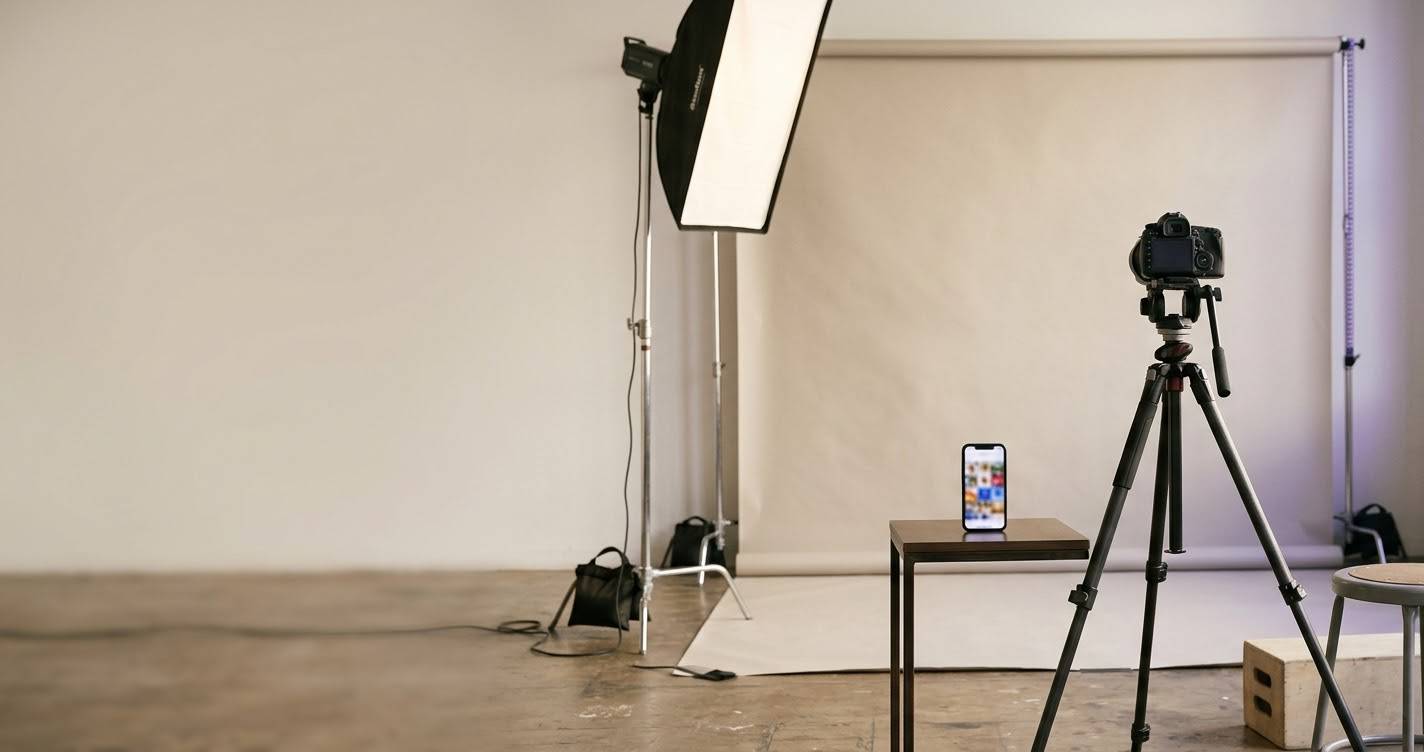
- Behind the scenes: your set, lighting, props and locations, with no model in a revealing state.
- Lighting diagrams: a simple drawing of where every light stood, next to a safe crop of the result.
- Before and after edits: colour grading and retouching on safe-for-work frames or details such as hands, fabric and texture.
- Portraits and clothed work: fashion, portraiture, landscapes, still life and street photography all show your eye.
- Gear and settings: "what's in my bag", favourite lenses and the settings behind a shot.
- Educational carousels: five posing tips, how to read light in a room, how to plan a shoot on a budget.
Text posts
You do not need a camera to post. Carousels made of text slides, quote cards and short written stories perform well because people save them.
- The story of a shoot: what went wrong, how you fixed it, what you learned.
- Business lessons: pricing, working with models, contracts and model releases, handling clients.
- Myths and facts: correct common misconceptions in your genre.
- Questions to your audience: "Natural light or strobes?" invites comments, which drive reach.
Reels
Reels reach people who do not follow you yet. A face is not required. Time-lapses of a set build, screen recordings of an edit, and text-on-screen tips set to audio all work. Make the first second count, because that is when viewers decide to keep watching. Our TikTok and Reels guide covers short video in more detail.
How do I write captions people can find?
Instagram search reads captions, alt text, names and locations. Write the way people search: "moody window light portrait", "boudoir photography tips", "film photography Amsterdam". Put the most important phrase in the first line. Add custom alt text to images through the advanced settings. Use three to five precise hashtags rather than thirty generic ones, and keep every hashtag safe for work, because some tags are restricted and can drag down a post's reach.
Where should my bio link point?
Point it to a safe-for-work page that you control and that shows your best clean work, then lets visitors choose where to go next. On BentBox, that is your SFW presentation page, which exists for exactly this job. Do not rely on a link-in-bio service to disguise an adult destination. Instagram can follow redirects and age-restricts or blocks links to adult sites, so the destination is what counts.
Avoid "link in bio for more" lines on suggestive images. Instagram treats that pairing as solicitation even when each part looks harmless on its own.
How often should I post, and what should I measure?
Consistency matters more than volume. Three to four posts a week, with Stories on most days, is sustainable for a solo creator. Check Insights once a week and look at four numbers: saves, shares, profile visits and link taps. Saves and shares tell you which content is valuable. Profile visits and link taps tell you which content sells you. Make more of whatever moves those numbers.
Spend fifteen minutes a day on genuine engagement: reply to comments, comment on work by photographers and models you admire, and join conversations in your niche. Accounts that only broadcast grow slowly. The daily promotion routine shows how to fit this into twenty minutes.
Is Instagram enough on its own?
No platform should be your only channel. Instagram works best as the top of your funnel, alongside X and Reddit, which have different rules and reach different people. If one platform changes its rules, the others keep your audience growing.
Frequently asked questions
Can I promote my photography on Instagram if I also sell adult content elsewhere?
Yes, as long as everything you post on Instagram is safe for work, your captions contain no sexual solicitation, and your link leads to a page that is itself safe for work. Instagram judges your posts, captions, bio and links, so keep all of them clean.
My Instagram account was banned. Can I just open a new one?
Appeal first. Meta's terms do not allow you to create a new account if a previous one was disabled for violating its rules, so a replacement account can be removed for that reason alone. If the appeal fails, read the terms before deciding what to do.
Do hashtags still matter on Instagram?
They matter less than they used to. Descriptive keywords in your caption, alt text, a clear name field and location tags now do more to help people find your posts in Instagram search. Use a few relevant hashtags rather than long blocks of them.
Does a link-in-bio tool hide where my link goes?
No. Instagram can follow redirects, so treat the final destination as the link it sees. The safest approach is a link to a safe-for-work page such as your BentBox presentation page or portfolio.
Is Instagram worth it if I can't post my main work?
Yes, if you use it for what it does well: showing your skill, building trust and getting found by people who search for your style. It works best as the top of your funnel, alongside platforms such as X and Reddit that have different rules.